The Science of the "Menopause Middle"
Is there a link between abdominal fat and the intensity of other symptoms like night sweats and brain fog?
5/8/20262 min read
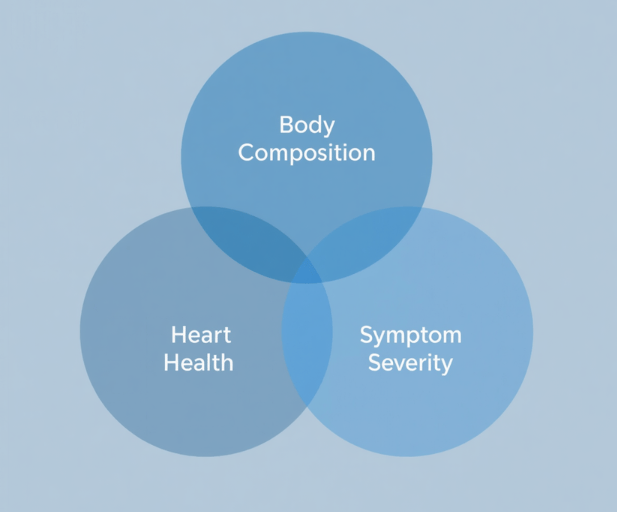
It’s not just about the jeans fitting differently. New research released this week shows that abdominal fat (visceral fat) acts as a "hub" for other symptoms.
Data indicates that a higher waist-to-height ratio can actually make night sweats, irritability, and "brain fog" more frequent and intense. It’s a network effect—when one symptom flares, the others follow.
The good news? Managing visceral fat through strength training and fiber-rich nutrition isn't just about aesthetics; it's about cooling down those hot flashes and clearing the fog.
Strength Training Strategies
Prioritize Compound Movements: Exercises that engage multiple muscle groups—such as squats, deadlifts, and overhead presses—burn more energy per rep and stimulate a higher metabolic response than isolated movements like bicep curls.
Lift for "Hypertrophy": To actively change body composition, aim for a weight that allows for 8 to 12 repetitions. The final two reps should feel challenging to complete with proper form. This "mechanical tension" is what signals the body to maintain muscle mass even as estrogen levels fluctuate.
Aim for Three Sessions Weekly: Consistency is more effective than intensity. Three 30-minute full-body sessions per week allow for the necessary 48-hour recovery period, which is vital for hormone regulation and muscle repair.
Fiber-Rich Nutrition Tips
Target 25-30 Grams Daily: Most adults average only 15 grams of fiber. Gradually increasing this to 30 grams can help lower insulin levels, which is a primary driver of visceral fat storage.
Focus on Soluble Fiber: Foods like oats, flaxseeds, beans, and Brussels sprouts contain soluble fiber, which turns into a gel-like substance in the gut. This slows digestion and helps prevent the blood sugar spikes that lead to belly fat accumulation.
Eat Fiber Before Carbs: Starting a meal with a high-fiber salad or non-starchy vegetables creates a "fiber buffer" in the stomach. This sequence reduces the glucose impact of the rest of the meal, helping to keep insulin levels stable.
Hydrate Proportionally: Fiber requires water to move through the digestive system effectively. Increasing fiber intake without increasing water can lead to bloating; aim for at least 8 to 10 glasses of water daily to support the process.
Medical Disclaimer: This post is for informational purposes only and does not constitute medical advice. Always consult with a healthcare professional before starting a new fitness or weight management program.