Your Phone Can Now Track Your Hormones: The New Wave of Menopause Tech That's Changing Everything
Track hormones on phone, new wave menopause tech, changing the menopause game, new ways to survive menopause, old dog, new tricks, perimenopause, postmenopause
5/22/20263 min read
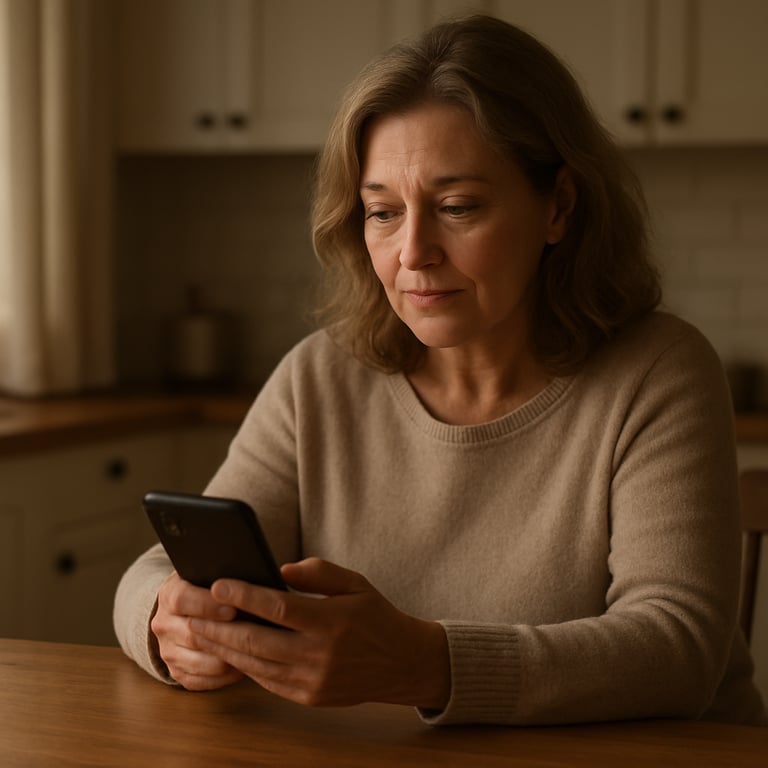
Let's be honest...for a long time, the menopause experience went something like this: you'd walk into a doctor's office, list a bunch of symptoms (tired, foggy, not sleeping, randomly sweating through your shirt in the middle of a meeting or at 2 a.m.), and walk out with either a shrug or a pamphlet. Not super helpful.
But here's what's different in 2026: technology is finally catching up to women's bodies - and it's genuinely exciting!
A new generation of femtech apps and wearables is giving midlife women real-time data on their hormone levels, sleep quality, and symptom patterns. We're talking smart rings and watches that track your temperature fluctuations overnight, apps that log your symptoms and spot patterns before you even notice them, and at-home hormone test kits that give you actual numbers - not just vibes - to bring to your next appointment. The conversation with your doctor just got a whole lot more specific.
So what's actually out there?
Here's a quick look at the types of tools making waves right now:
Hormone monitoring kits. Companies like Mira have moved beyond ovulation tracking into full hormone panels for perimenopausal women. You pee on a stick (yep, still that), but now you're getting FSH, LH, and estrogen data that you can actually trend over time. It's the difference between "I think my hormones are all over the place" and "here's a chart that proves it."
Wearables with menopause-specific features. Smartwatches and rings (think Oura, Apple Watch, and newer dedicated devices) are getting better at tracking sleep disruption, skin temperature spikes, and resting heart rate changes - all of which can shift significantly during perimenopause. Some apps built on top of these devices are now letting you overlay your symptom logs with your biometric data, so you can see exactly how a hot flash at 3 am tanks your deep sleep.
Telehealth platforms built for midlife women. This is maybe the biggest shift. Platforms like Midi Health, Alloy, and Evernow are connecting women directly with menopause-specialized clinicians - no more hoping your GP happens to be up on the latest HRT research. You fill out a detailed symptom history, often supported by an app, and get matched with a provider who actually specializes in this stuff. Wildly refreshing.
AI-powered symptom trackers. Some apps are now using AI to help you understand what's happening in your body and predict rough patches before they hit. Think of it like a weather forecast for your hormones. Not perfect, but way better than being blindsided.
Why does this actually matter?
Because for too long, "just deal with it" was basically the standard of care. Women were leaving jobs, tanking their sleep, struggling through brain fog, and generally being told that this was just the way life is now. It wasn't acceptable then, and it's definitely not acceptable now that we have better options.
The data from these tools is also starting to change clinical conversations. When you can walk into an appointment with three months of sleep data, symptom logs, and hormone trends, you're no longer relying on a doctor to believe your subjective experience. You've got the proof. That shift in power - from guessing to knowing - is huge.
And it's not just individual women benefiting. The longitudinal data being collected by these platforms (with consent, of course) is helping researchers better understand the massive variation in how women experience perimenopause and menopause. And that's good for all of us.
A few things to keep in mind
This stuff is genuinely useful, but it's not magic - and it's not a replacement for actual medical care. At-home hormone tests can give you helpful data points, but hormone levels fluctuate a lot, and interpreting them without clinical context can lead you down some confusing rabbit holes. The same goes for wearable data: a spike in skin temperature doesn't automatically mean a hot flash, and not every sleep disruption is menopause-related.
The best approach? Use these tools to get smarter about your own patterns, then bring that information to a provider who can help you make sense of it. Think of the tech as your prep work, not your diagnosis.
Also worth noting: access to these tools isn't equal. Many of the telehealth platforms and advanced wearables come with real costs, and insurance coverage is still catching up. It's something the industry needs to fix, and frankly, it's something worth advocating for.
The bottom line
Your body's been talking for years. You've been doing your best to listen. Now, for the first time, you actually have tools sophisticated enough to help you hear it clearly - and to translate what it's saying into something your doctor can work with.
The era of "just push through it" is over. The era of data-driven, personalized menopause care is here. And honestly? It's about time.
Medical Disclaimer
This article is for informational purposes only. Consumer health tracking apps and devices are not substitutes for clinical diagnosis or medical care. Data from wearables and at-home tests should always be reviewed with a licensed healthcare provider. Product features and accuracy vary; verify claims with your doctor before acting on any results.